Luck and skill in dice games: what the numbers can tell you
Dice probabilities describe possible random outcomes, not a guaranteed result on your next turn. Use them to understand uncertainty, then assess the decisions and physical execution that the particular game actually lets you control.
Start with a clearly defined dice model
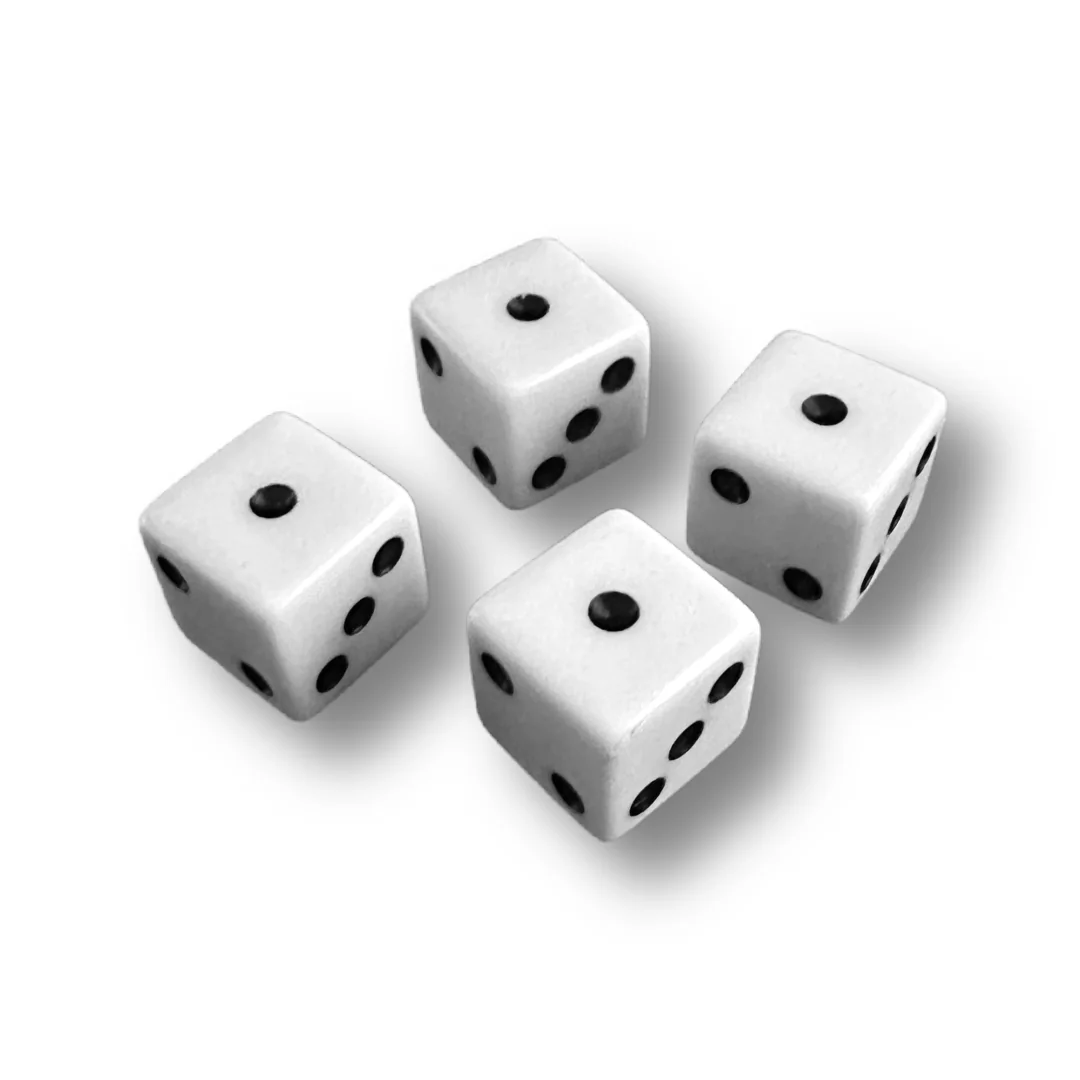
For the examples here, assume ordinary six-sided dice, each face equally likely, with independent rolls. Those are mathematical assumptions, not a claim that every physical throw or every game's scoring system behaves this way. Changing the dice or the rules changes the calculation.
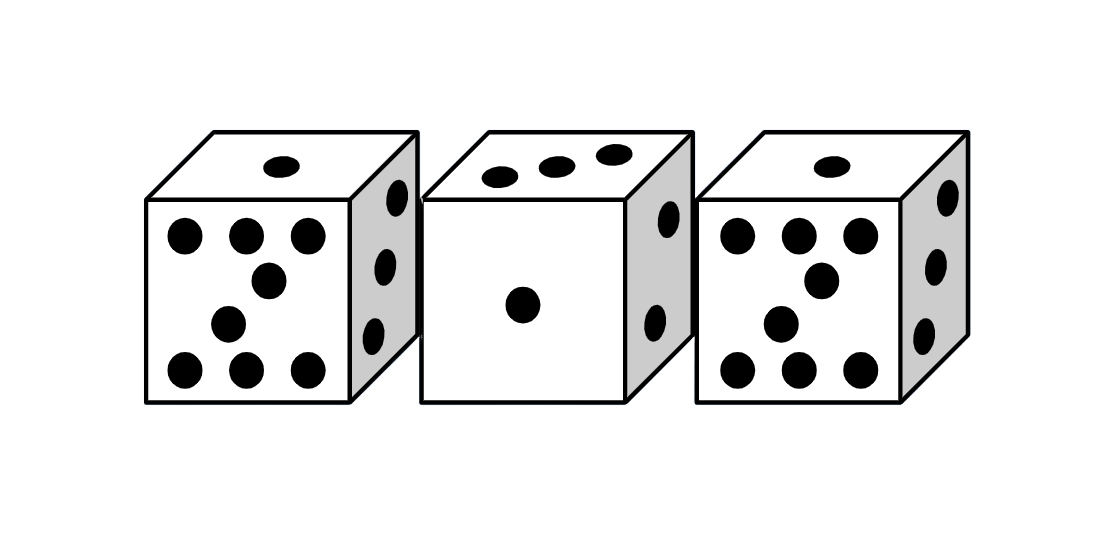
With one fair die, each face has one chance in six. With two independent fair dice, there are 36 equally likely ordered face pairs. A first die showing one and a second showing six is a different pair from a first die showing six and a second showing one.
A total of seven is not the same as a six
To calculate a probability, first name the event precisely. “Roll a total of seven,” “roll at least one six” and “roll two sixes” describe different sets of outcomes. Counting the relevant pairs makes the difference visible.
| Event with two fair dice | Favourable pairs | Probability |
|---|---|---|
| Total of seven | 6 out of 36 | 1 in 6, about 16.7% |
| Two sixes | 1 out of 36 | About 2.8% |
| At least one six | 11 out of 36 | About 30.6% |
| A matching pair | 6 out of 36 | 1 in 6, about 16.7% |
The six pairs totalling seven are 1+6, 2+5, 3+4, 4+3, 5+2 and 6+1. For “at least one six,” six pairs have a six on the first die and six have a six on the second. Subtract the double-six pair counted twice: 6 + 6 − 1 = 11.
A result is not due because it has been missing
Under the independent-roll assumption, a run of rolls without a six does not increase the chance of a six on the next roll. That next chance is still one in six. The earlier sequence may look surprising, but it does not create a debt that the die must repay.
Likewise, a one-in-six event is not promised once in every six attempts. For example, the chance of no six in six independent rolls is (5/6) to the sixth power, approximately 33.5%. A short stretch of play can differ substantially from an average.
Separate the face value from the whole game
A probability table for face values is not automatically a scoring table. In a game where location matters, the landing position and the rules for that location also enter the result. You cannot calculate a player's complete scoring chance from the numbers on the dice alone.
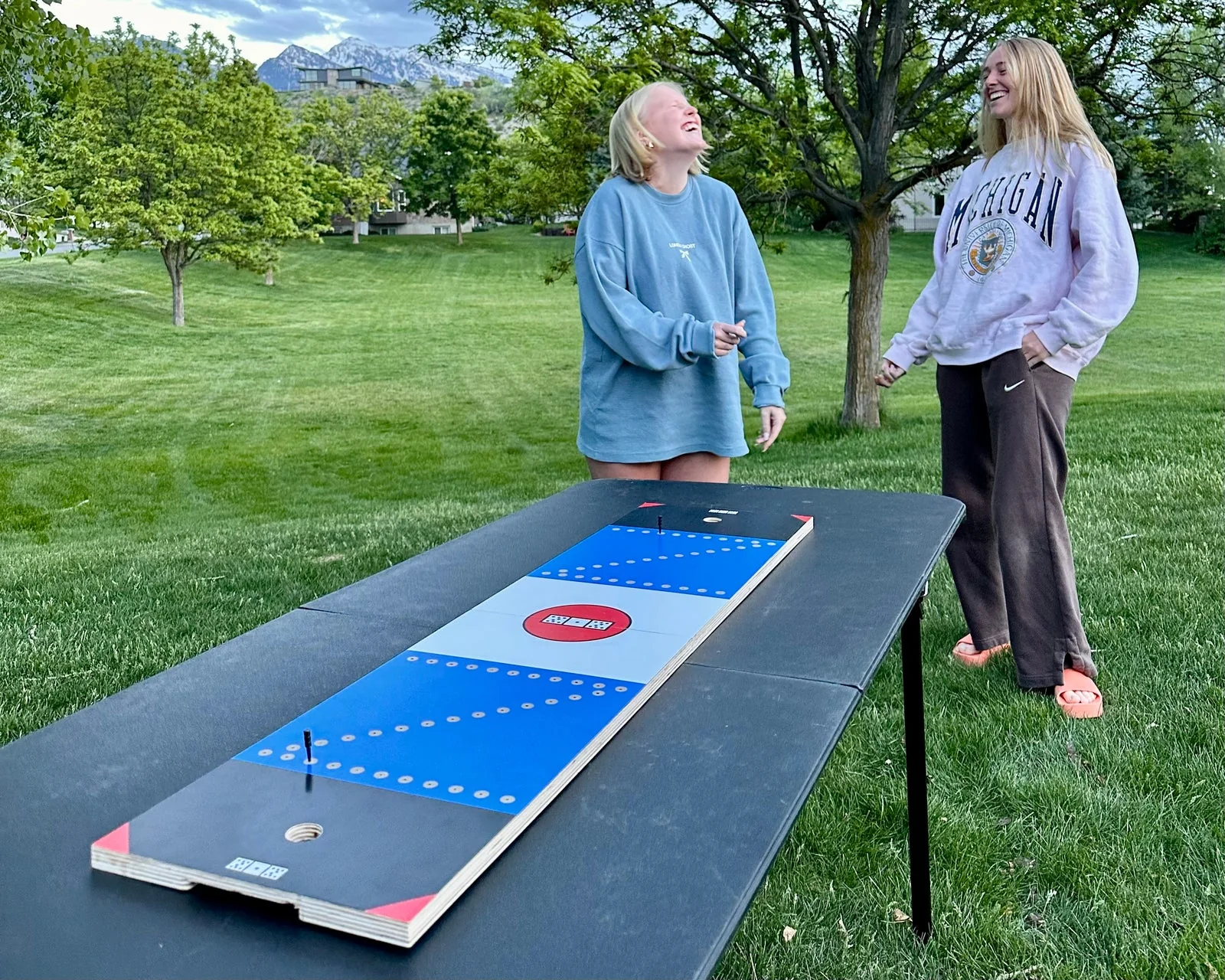
For ZONEZ, consult the scoring and winning rules rather than applying the table above as a strategy formula. The calculations here do not model board zones, throwing technique or a player's chance of winning. They are a guide to the simpler face-value part of uncertainty.
Review a choice separately from its outcome
After a turn, ask what you knew when you made the decision. Did you understand the rules? Was the choice consistent with your aim? If the game involves physical execution, did you use the motion you intended? Those questions are more useful than declaring every successful turn a good decision and every unsuccessful one a bad decision.
If you practise, keep the setup consistent and change one deliberate part of your approach at a time. Treat a handful of results as observations, not proof that you have discovered a winning method. For a social game night, you can also choose to enjoy the uncertainty without turning every turn into a statistics exercise.